
Setting Up a Quick Reply
1. Go to Settings → Quick Replies
Go to Settings from the left sidebar and click Quick Replies under the Organisation section.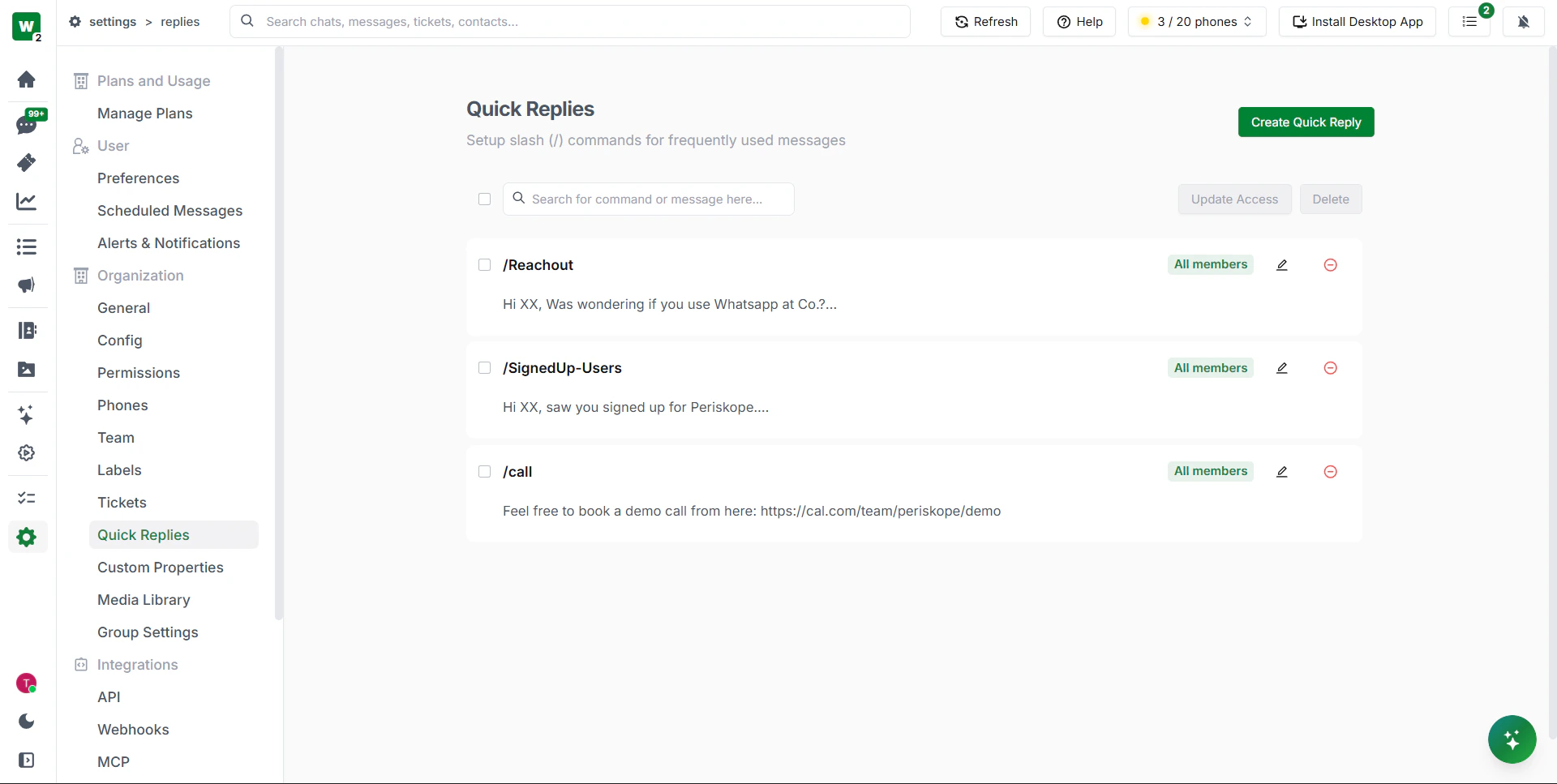
2. Create a new Quick Reply
Click Create Quick Reply in the top right.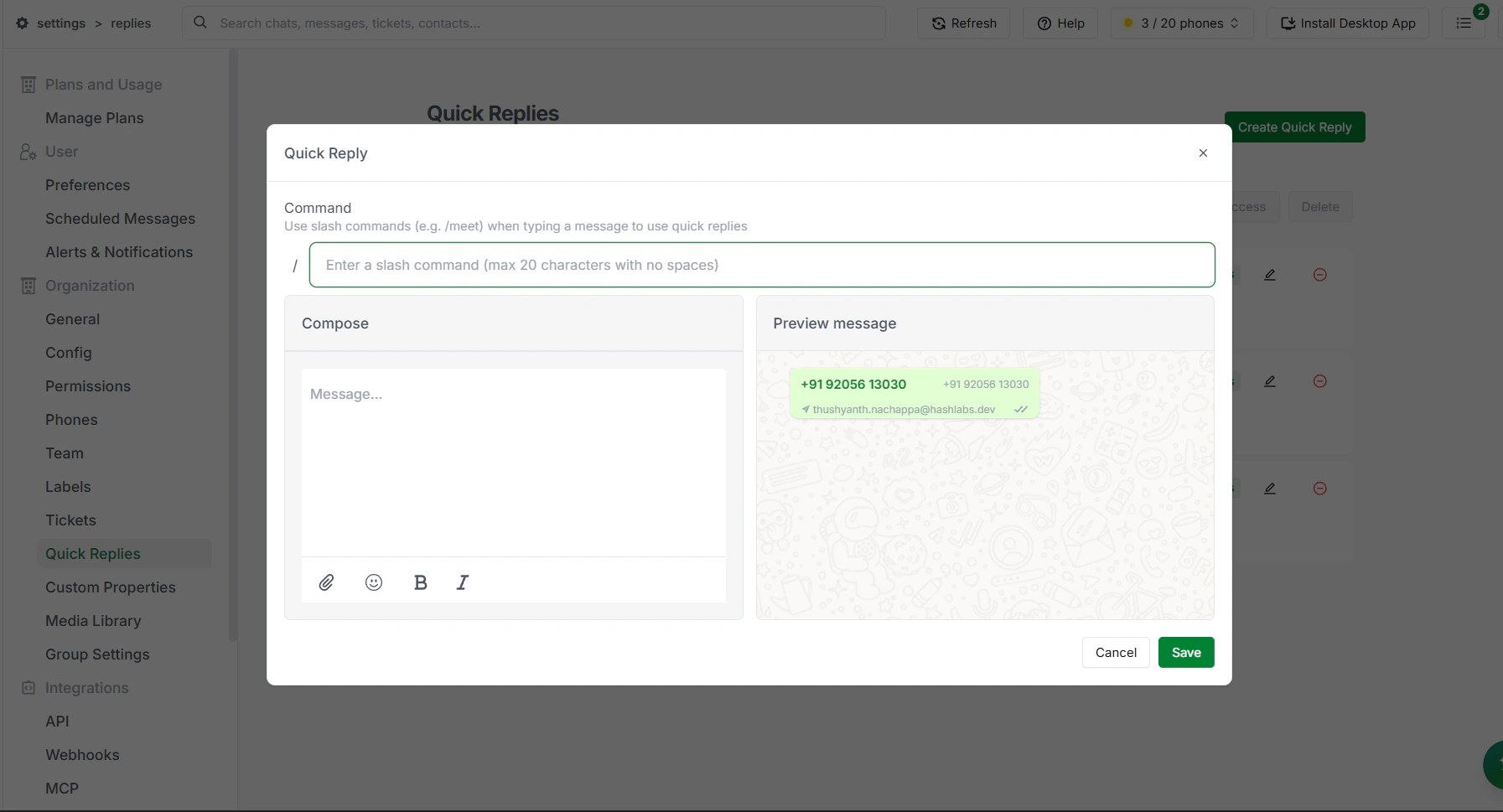
3. Enter a command
Enter a command — for example,/call. This is the shortcut your team will type in the message box to trigger the quick reply.
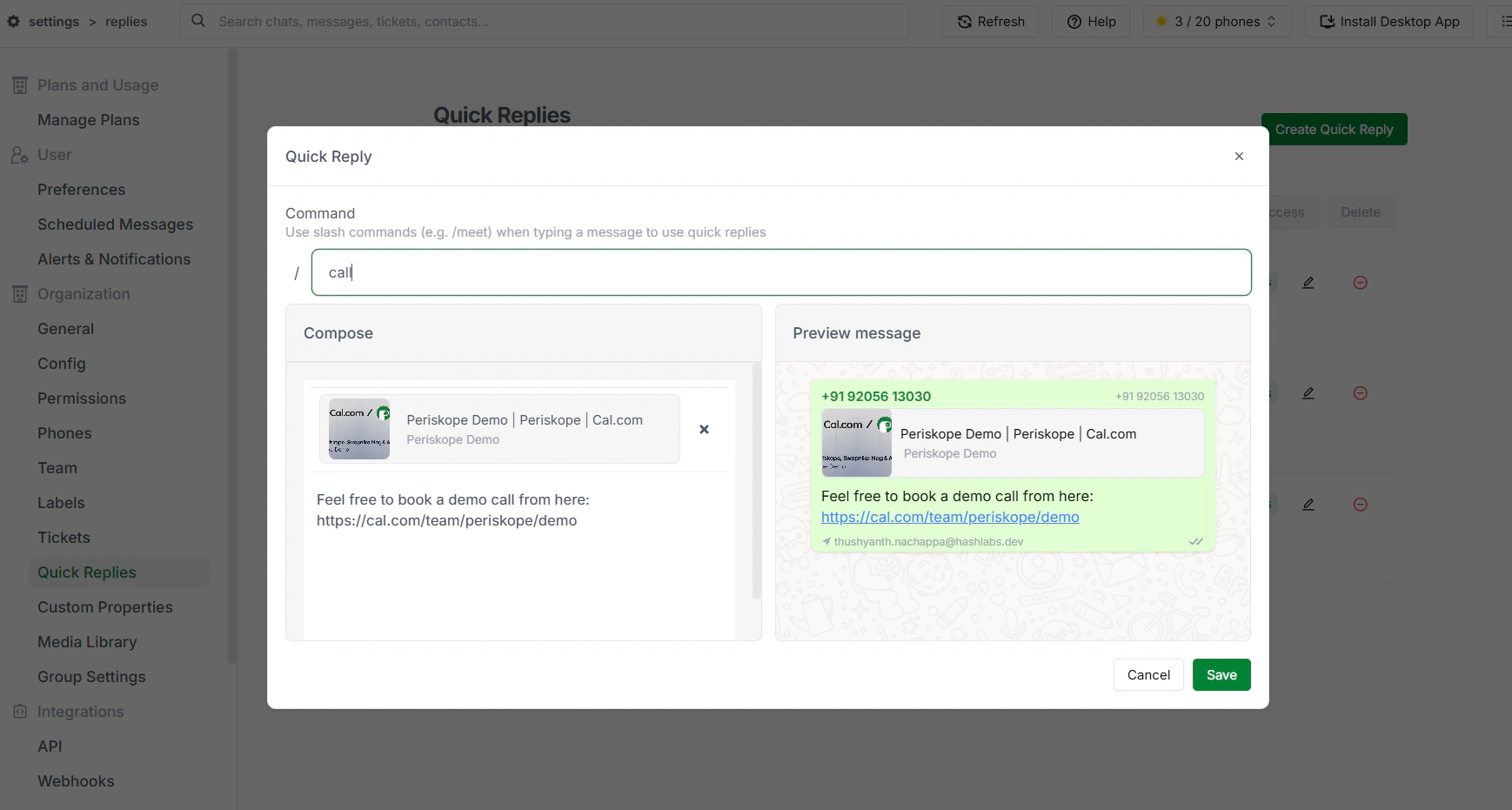
Tip: Keep commands short and memorable — your team will be typing these in the middle of live conversations, so something like/call,/pricing, or/refundworks better than something long.
4. Write the message
In the Compose section, type the message you want to send. For example: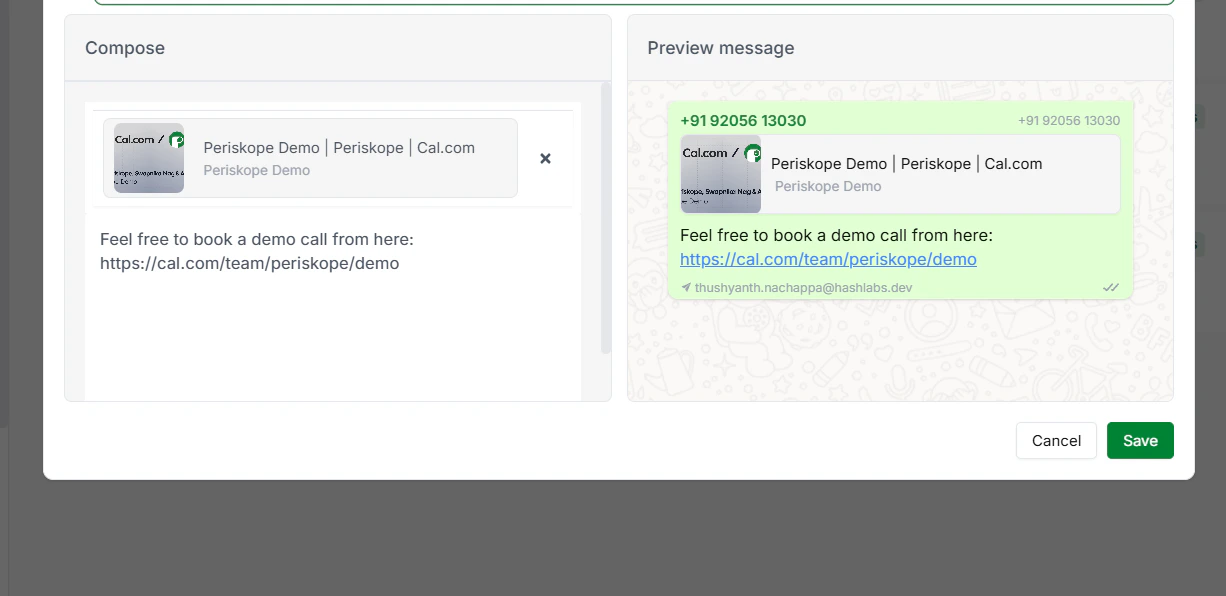
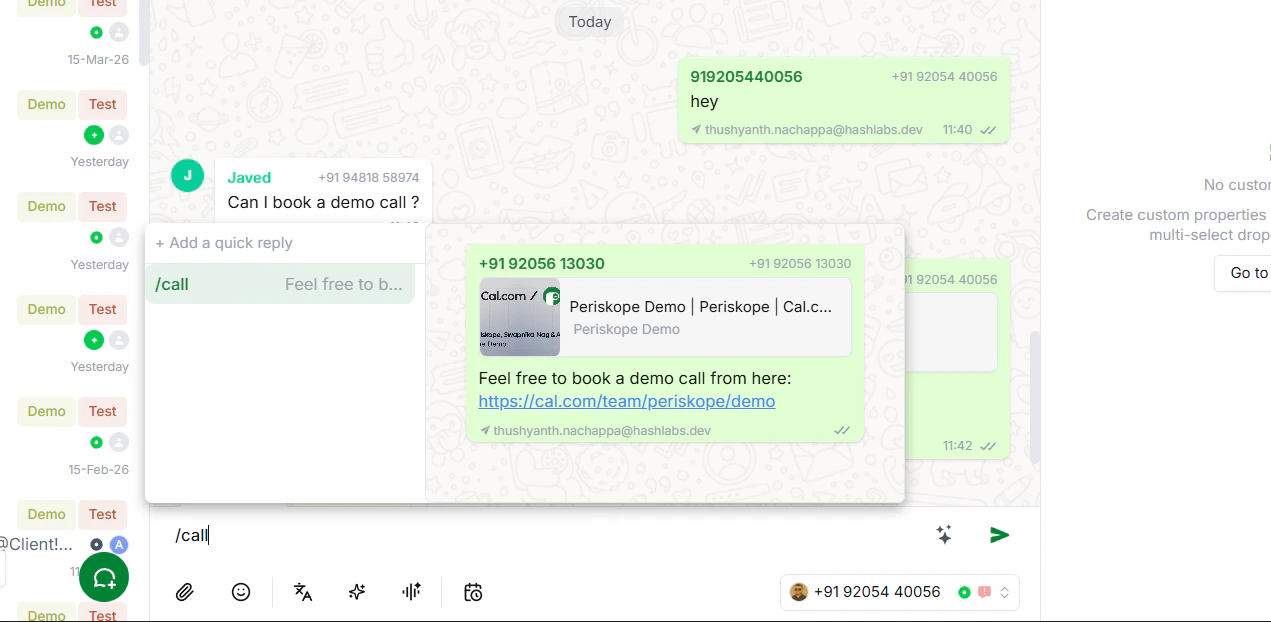
Using a Quick Reply in a Chat
- Open any chat
- In the message box, type your command — for example,
/call - The quick reply appears instantly as a suggestion
- Click it to populate the message box
- Hit send
Best Practices
Create replies for your most common messages — Think about what your team types repeatedly every day: demo links, pricing info, refund policies, onboarding steps. Each one is a good candidate for a quick reply. Use clear command names — Make commands intuitive so your team doesn’t have to remember obscure shortcuts./pricing, /demo, /support are all easy to recall.
Keep messages up to date — If a link changes or your messaging evolves, go back to Settings → Quick Replies and update the relevant entries so your team is always sending the right thing.
Train your team — Make sure everyone knows which quick replies exist and what commands to use. A shared list in your team’s internal notes can help.